

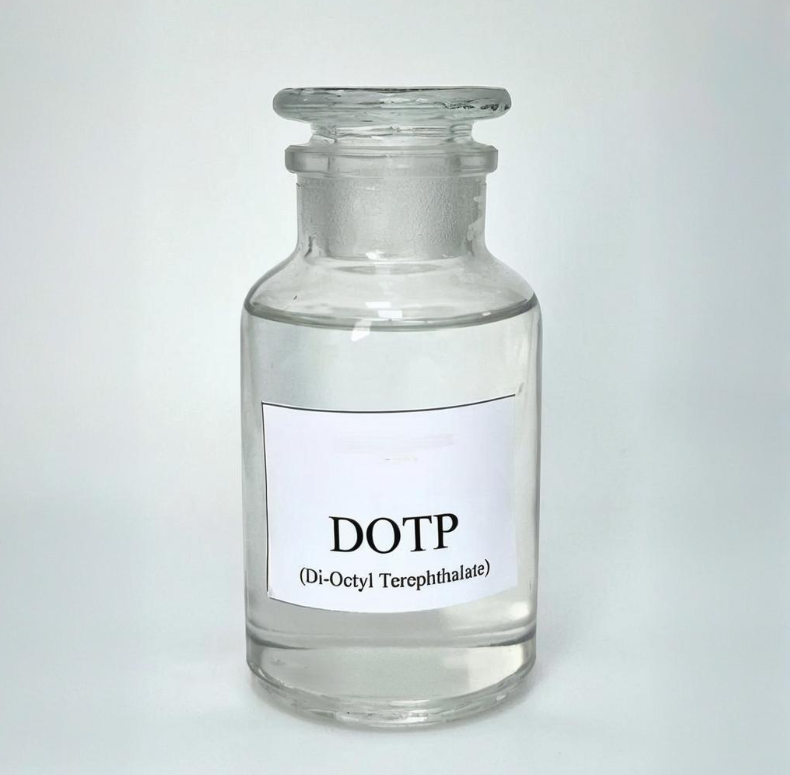
Phthalate esters are the most common plasticizers (also known as plasticizers), including di (2-ethylhexyl) phthalate (DEHP); Diisononyl phthalate (DINP); Diphenyl phthalate (DPHP); Dimethyl phthalate (DMP); Diethyl phthalate (DEP); Dibutyl phthalate (DBP); Dipentyl phthalate (DPP); Dihexyl phthalate (DHXP); Di-n-octyl phthalate (DNP); Diisobutyl phthalate (DIBP); Dicyclohexyl phthalate (DCHP); Di-n-octyl phthalate (DNOP); Butyl benzyl phthalate (BBP); Di (2-methoxy) ethyl phthalate (DMEP); Diethyl phthalate (DEEP); Di (2-butoxy) ethyl phthalate (DBEP); Bis (4-methyl-2-pentyl) phthalate (BMPP) and others. Diethyl hexyl phthalate (DEHP) is widely used in the plasticizer industry, followed by dibutyl phthalate (DBP). The data shows that this type of substance has certain reproductive toxicity and is the "culprit" causing male reproductive problems.
The sources of phthalate plasticizers in food include: firstly, plastic containers, pipes, packaging materials, and sealing materials that come into contact with food migrate into food; The second is the impact of plasticizers in the environment on food, such as plasticizers present in soil and water that may enter the food chain and affect food. In addition, plasticizers may also be illegally added to food additives, thereby contaminating food, such as the 2011 Taiwan plasticizer contamination incident. To prevent such incidents from occurring, China has established limits for phthalates in food and food additives. However, these limit values are generally consistent with migration limits, indicating that the limit values for food and food additives may have been formulated with reference to migration limits. Therefore, the establishment of limits for such substances in food is still based on the risk assessment conclusion of the migration limit of food contact materials.
The regulations on food contact materials in foreign countries are important references for the formulation of corresponding standards in China, and studying their risk assessment of phthalates is of great reference significance for China. The following will introduce the risk assessment and conclusions of phthalates in the European Union, the United States, Japan, and Canada.
EU Risk Assessment Information and Conclusion on Phthalates
In 2005, EFSA conducted a risk assessment on five phthalates in food contact plastics, including di (2-ethylhexyl) phthalate (DEHP), butyl benzyl phthalate (BBP), dibutyl phthalate (DBP), diisopropylhexyl phthalate (DIDP), and diisononyl phthalate (DINP). These five substances have been approved for use in food contact plastics. In 2019, EFSA updated its risk assessment report for the above substances.
According to the effects of five phthalates on the reproductive system, four of them (DBP, BBP, DEHP, and DINP) play a key role in reducing fetal testosterone levels. Based on this hazard, EFSA grouped these four substances and set the daily allowable intake (TDI) for this group of substances at 50 µ g/kg bw (DEHP equivalent). In addition to this value, EFSA has also set TDI values for each of the four substances mentioned above. In addition, DIDP does not affect fetal testosterone levels at the assessed intake level. Based on the impact of DIDP on the liver, EFSA sets the TDI of DIDP at 150 µ g/kg bw.
According to the new assessment report released by EFSA, the dietary exposure of the general consumer population to DBP, BBP, DEHP, and DINP is 7 µ g/kg bw, which is approximately one seventh of TDI. The dietary exposure of high consumption individuals is 12 µ g/kg bw, which is approximately one fourth of TDI. For DIDP, the dietary exposure of high consumption individuals is one fifteenth of TDI. Therefore, these five substances have no impact on public health.
Risk assessment information and conclusions on phthalates in the United States
In the United States, additives that can be used for food contact materials are considered indirect food additives. At present, phthalates that have been evaluated and approved as indirect food additives include: dihexyl phthalate (DHXP), diisononyl phthalate (DINP), butyl benzyl phthalate (BBP), dicyclohexyl phthalate (DCHP), and diphenyl phthalate (DPHP).
The assessment results of the US Environmental Protection Agency (EPA) are consistent with those of the European Union, indicating that di (2-ethylhexyl) phthalate (DEHP) has animal reproductive and developmental toxicity. There is currently no information available on the chronic, reproductive, developmental, or carcinogenic effects of DEHP on humans.
High doses of oral DEHP (5-10 g) can cause gastrointestinal pain in humans. Animal experiments have shown that chronic inhalation of DEHP increases lung and liver weight, and oral contact can affect the development and reproductive function of rats and mice. In addition, a study by the National Toxicology Program (NTP) of the United States shows that oral DEHP can increase the incidence rate of liver cancer in rats and mice.
EPA has listed six phthalates, including di (2-ethylhexyl) phthalate (DEHP), butyl benzyl phthalate (BBP), diethyl phthalate (DEP), dibutyl phthalate (DBP), dimethyl phthalate (DMP), and dioctyl phthalate (DOP), as priority controlled toxic pollutants.
EPA has classified DEHP as a Class B2 carcinogen, which may cause cancer. List butyl benzyl phthalate (BBP) as a Class C carcinogen, which may be carcinogenic to humans. Classifying dibutyl phthalate (DBP) as a Class D carcinogen does not classify its carcinogenicity in humans.
In addition, the FDA has released a risk assessment report on di (2-ethylhexyl) phthalate (DEHP) in medical grade PVC.
Risk assessment information and conclusions on phthalates in Japan
In 2009, the Japanese Food Safety Commission (FSCJ) conducted a risk assessment of six phthalates in food contact plastics and released risk assessment reports from 2013 to 2016. Six types of phthalate esters include diisopropyl phthalate (DIDP), diisononyl phthalate (DINP), di-n-octyl phthalate (DNOP), dibutyl phthalate (DBP), di (2-ethylhexyl) phthalate (DEHP), and butyl benzyl phthalate (BBP).
According to the risk assessment report released by the Japanese Food Safety Commission, the risk assessment conclusions for six phthalates are as follows: DIDP: Currently, there is no literature or biological monitoring data on the content of DIDP in food, beverage water, and house dust in Japan, making it impossible to estimate the daily intake of DIDP in Japanese people. DINP: Based on current literature data, the daily intake of DINP for Japanese adults is estimated to be 0.4 µ g/kg bw (average estimate); DNOP: Using literature data related to the detection concentration of DNOP in food, air (considering particulate matter in the air), and water, the maximum estimated daily intake of DNOP in Japanese people is 0.24 μ g/kg bw; DBP: Based on the cumulative concentration of DBP in beverage water, indoor air, food, and house dust, the daily intake of DBP for adults is estimated to be 5 μ g/kg bw; DEHP: Based on the concentration of DEHP in environmental media (food, air, cosmetics, etc.), the daily intake of DEHP for 1-year-old children is 5.7-6.1 μ g/kg bw, and the daily intake of DEHP for the entire age group is 1.8-12 μ g/kg bw; BBP: Based on literature data related to the detection concentration of BBP in food, air, beverage water, and house dust, the daily intake (average estimated) of BBP for Japanese adults is 0.11 μ g/kg bw. The daily intake of the other five substances, except for DIDP, is lower than the daily allowable intake. Therefore, it can be inferred that these five substances will not have a significant impact on public health at present.
Risk assessment information and conclusions on phthalates in Canada
In 1994, Environment Canada and Health Canada prioritized the assessment of DEHP and continued to conduct scientific status reports and cumulative risk assessments on DEHP and other phthalates. In August 2015, Health Canada released four scientific status reports and cumulative risk assessment recommendations that comprehensively considered 14 phthalates. Canada proposes to use the Cumulative Risk Assessment (CRA) method to evaluate certain phthalates in this group, continuously collecting hazard information on an additional 14 phthalates substances (out of a total of 28). In October 2017, Environment Canada and Health Canada released a draft screening assessment for phthalates. Canada updated its assessment results in 2020 and 2021.
In 1994, the Canadian Department of Environment and Health evaluated DEHP and concluded that it was harmful to health. DEHP was added to the list of toxic substances under the Canadian Environmental Protection Act (CEPA 1999 S.C. 1999). According to this assessment, Canada has imposed restrictions on the use of DEHP: prohibiting its use in cosmetics; Restricting its use in medical equipment; Restrict its use in children's toys and childcare products.
In December 2020, Environment Canada and Health Canada released risk assessment results for 15 phthalates. The final screening evaluation concluded that 14 substances in the original phthalate substance group (DMP, DIBP, CHIBP, BCHP, DCHP, DBzP, B79P, DMCHP, DIHepP, BIOP, B84P, DINP, DIDP, and DUP) are harmless to the environment or human health (as defined in Section 64 of the Canadian Environmental Protection Act CEPA 1999 S.C. 1999, c. 33), while DEHP is harmful to human health and the environment. Although B79P is harmless to human health at current exposure levels, if exposure increases, B79P may have concerning effects on human health. In addition to B79P, there are 19 other substances that are also dangerous, so if the exposure level increases, it may have an impact on human health or the environment. The other 19 substances are DMP、DIBP、CHIBP、BCHP、DCHP、DBzP、DMCHP、DIHepP、BIOP、B84P、DINP、DEP、DPrP、DBP、BBP、DnHP、79P、DIOP And DnOP.
On June 18, 2021, Canada updated the assessment results of DEHP. The concentration of DEHP in Canadian urine (measured as the sum of DEHP metabolites) is much lower than the biomonitoring equivalent threshold based on the daily tolerable intake of Health Canada. Biological monitoring data shows that since the implementation of risk management measures, the risk of exposure to DEHP among Canadians has decreased, with DEHP exposure reduced by at least two-fold compared to the dietary exposure estimate proposed in the 1994 assessment. It is recommended to continue including DEHP metabolites in the Canadian Health Measures Survey to verify the continued effectiveness of risk management measures in reducing Canadian exposure to DEHP.