

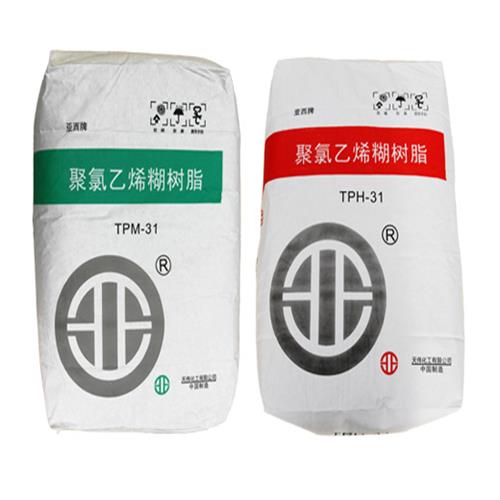
Recently, the domestic PVC market has been weak, with significant differentiation in raw material prices and profit and loss between ethylene based PVC resin and carbide based PVC resin. Supply expectations have slightly increased, and the short-term market has fluctuated narrowly. The pattern of oversupply in the medium and long term is difficult to change and is suppressed by factors such as foreign trade, resulting in overall pressure operation.
1、 Import volume decreased by 9% year-on-year, driven by multiple factors leading to a decrease in import dependence
Since 2026, the domestic PVC paste resin import market has experienced fluctuations in volume and price, with significant structural differentiation characteristics. According to customs data, the monthly import volume in April was 6926.767 tons, a significant decrease of 34.56% compared to the previous month, with an average import price of 1009.62 US dollars per ton; From January to April, the cumulative import volume was 34700 tons, a year-on-year decrease of 9%. During this period, the average import price remained stable at 986 US dollars per ton, and the domestic market's dependence on imported goods continued to decrease.
The reduction in import volume is mainly influenced by two core factors: firstly, the sustained abundant domestic supply, which will maintain high industry supply in 2025 and put pressure on enterprise inventory; In the first quarter of 2026, Tianjin Bohai Chemical Development's 120000 tons/year new production capacity was successfully put into operation, further increasing domestic production, increasing downstream procurement options, and significantly reducing the substitutability of imported products. Secondly, geopolitical conflicts have disrupted the supply chain. In early March, the situation in the Middle East spiraled out of control. As an important production and transit hub for global petrochemicals, regional turbulence has hindered transportation, increased raw material prices, pushed up shipping and production costs, and increased delays and cancellations of orders, directly catalyzing a sharp decline in import volume in April compared to the previous month.
2、 Import sources are highly concentrated, and Taiwan, China of China ranks first
From the perspective of the pattern of import sources, Taiwan, China, China, has remained the largest source of imports. In April, the import volume from Taiwan was 2989.425 tons, accounting for 43.16% of the total import volume, with an average import price of 794.19 US dollars per ton, highlighting the price advantage.
This pattern benefits from the long-term deep cultivation of leading enterprises such as Formosa Plastics in the mainland market, relying on advantages such as geographical proximity, efficient response, and supply-demand adaptation, to build a stable channel and customer system. It specializes in high-end glove materials and universal materials, and has become one of the core choices for downstream enterprises due to its stable quality and outstanding cost-effectiveness.
This pattern benefits from the long-term deep cultivation of leading enterprises such as Formosa Plastics in the mainland market, relying on advantages such as geographical proximity, efficient response, and supply-demand adaptation, to build a stable channel and customer system. It specializes in high-end glove materials and universal materials, and has become one of the core choices for downstream enterprises due to its stable quality and outstanding cost-effectiveness.
3、 PVC gloves have started production smoothly, and the demand for replenishing raw materials has been released
From January to March 2026, the PVC glove industry will maintain a high level of production, with a slight adjustment in capacity utilization rate to 41.96%, and overall operation will be stable. Despite the decrease in the price of raw material PVC paste resin weakening cost support, the high prices of plasticizers and other additives still provide strong support for the overall cost of factories; Overlay the enterprise order schedule until June, and gradually release the demand for phased raw material replenishment.
4、 Trend outlook: Import substitution accelerates, structure shifts towards high-end concentration
In the long run, the domestic dependence on PVC paste resin imports will continue to decline. With the continuous upgrading of domestic technology and the release of new production capacity, the incremental space for overseas exports to China is limited. The import volume from January to April 2026 decreased by 9% year-on-year, which is a continuation of this trend.
In the second half of the year, domestic supply pressure will further increase, and the market supply will continue to be abundant; Emerging fields on the demand side bring incremental growth, but traditional downstream recovery still takes time. The escalation of geopolitical risks and the rise of trade protectionism have led to increased uncertainty in the import market. It is expected that the import volume will continue to operate at a low level, and the import structure will continue to tilt towards high-end specialty products. The import substitution process for mid to low end products will accelerate comprehensively.
In the second half of the year, domestic supply pressure will further increase, and the market supply will continue to be abundant; Emerging fields on the demand side bring incremental growth, but traditional downstream recovery still takes time. The escalation of geopolitical risks and the rise of trade protectionism have led to increased uncertainty in the import market. It is expected that the import volume will continue to operate at a low level, and the import structure will continue to tilt towards high-end specialty products. The import substitution process for mid to low end products will accelerate comprehensively.