

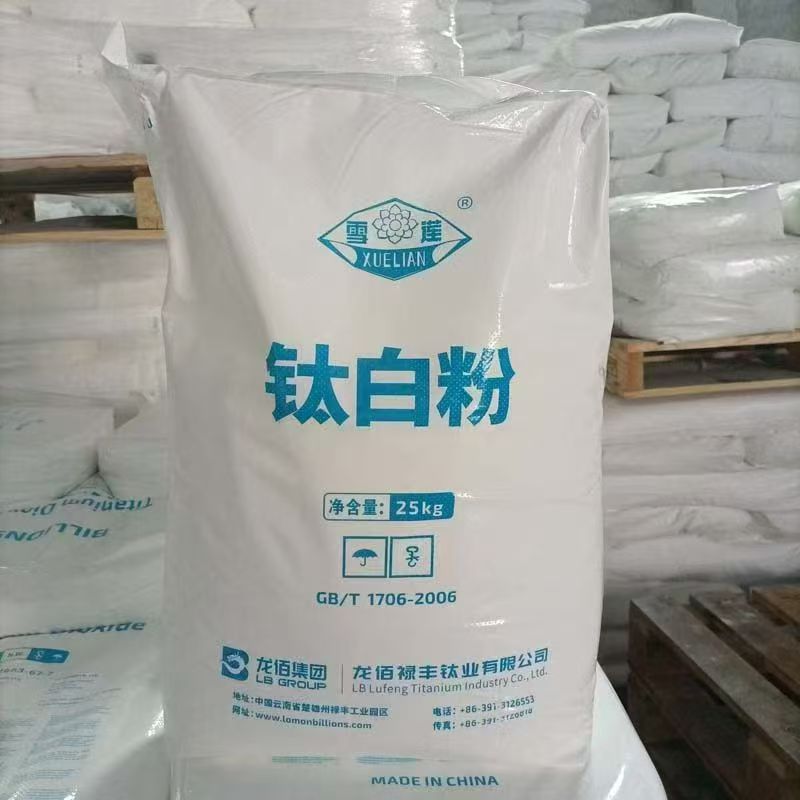
Color masterbatch, as a type of polymer coloring agent, is widely used in the plastic industry. Its main function is to provide uniform and stable color for various plastic products. According to incomplete industry data, the total amount of titanium dioxide used for color masterbatch production is approximately 20000 to 30000 tons per year. This data reflects the important position of titanium dioxide in the masterbatch industry. The production of color masterbatch is not only related to the appearance of plastic products, but also directly affects their mechanical properties, weather resistance, and service life. Therefore, strict requirements have been put forward for the selection and application of titanium dioxide.
1、 Industry application background
In the production of color masterbatch, titanium dioxide is divided into three grades based on its crystal structure and source: high, medium, and low. High end titanium dioxide mainly relies on imported rutile titanium dioxide, which has excellent optical properties and chemical stability, and is suitable for fields with extremely high requirements for color and performance, such as high-end home appliance casings, automotive components, etc. The mid-range titanium dioxide mainly uses domestically produced rutile type products, which have relatively balanced performance and can meet the needs of most daily plastic products. Low end titanium dioxide uses domestically produced anatase titanium dioxide, although its whiteness and coverage are slightly inferior to rutile type, the cost is lower and it is suitable for some fields that do not require high performance, such as ordinary packaging materials or disposable plastic products.
The application of titanium dioxide in color masterbatch is not limited to providing white color, but is often used as a base color or adjusting agent to mix other colors. In addition, the high refractive index and covering power of titanium dioxide make it an indispensable component in plastic products, especially in light or white products, where the amount of titanium dioxide directly determines the final appearance of the product.
2、 Classification and selection of titanium dioxide powder
Titanium dioxide can be divided into two categories based on its crystal structure: rutile titanium dioxide and anatase titanium dioxide. Rutile titanium dioxide has a higher refractive index, better weather resistance, and anti powdering performance, thus occupying a dominant position in high-end color masterbatch. Although anatase titanium dioxide has high whiteness, its photochemical activity is strong, which can easily lead to aging of plastic products when used outdoors. Therefore, it is mostly used indoors or in fields where weather resistance is not high.
In the production of color masterbatch, the selection of titanium dioxide needs to consider multiple factors comprehensively. Firstly, there is the optical performance, including whiteness, coverage, and coloring power. High grade rutile titanium dioxide usually has higher whiteness and hiding power, and can achieve ideal coloring effects with less dosage. Next are chemical stability and weather resistance, especially for plastic products used outdoors. Titanium dioxide must be able to resist the erosion of ultraviolet rays, high temperatures, and humid environments. In addition, the dispersibility of titanium dioxide is also a key indicator, which directly affects the production efficiency of color masterbatch and the appearance quality of plastic products.
The reason why imported rutile type titanium dioxide has become the preferred choice for high-end color masterbatch is because of its advanced production technology, uniform particle size distribution, and special surface treatment, which can be better compatible with the resin matrix. In recent years, the quality of domestically produced rutile titanium dioxide has been continuously improving, gradually occupying a place in the mid-range market. Sharp titanium dioxide still has a place in the low-end market due to its cost advantage, but its application scope is limited by its performance shortcomings.
3、 Composition and Function of Color Masterbatch
Masterbatch is a high concentration pigment preparation, which consists of pigments, resins, dispersants, and various additives. Among them, pigment is the core component of color masterbatch, responsible for providing color; Resin serves as a carrier, allowing pigments to be uniformly dispersed and firmly attached to the plastic matrix; Dispersants are used to improve the dispersibility of pigments and prevent agglomeration.
In addition to the basic ingredients, various functional additives are often added to color masterbatch to meet the needs of different application scenarios. For example, fluorescent whitening agents can enhance the whiteness and brightness of plastic products, especially in light colored products where the effect is significant; Antioxidants and anti UV agents can delay the aging process of plastic products and extend their service life; Antistatic agents are used to reduce static adsorption on plastic surfaces and are suitable for fields such as electronic packaging; Toughening agents and brighteners are used to enhance the mechanical properties and surface gloss of the product, respectively.
Titanium dioxide is used as a white pigment in color masterbatch, and its advantages are mainly reflected in the following aspects:
Non toxic and environmentally friendly: Titanium dioxide has stable chemical properties and does not release harmful substances, meeting strict standards for food contact materials and medical plastics.
High coverage power: The high refractive index of titanium dioxide enables it to effectively cover the natural color of plastic substrates, maintaining uniform color even at high concentrations.
Good dispersibility: Surface treated titanium dioxide can be well compatible with the resin matrix, reducing energy consumption and time in the production process.
Good weather resistance: Rutile titanium dioxide is particularly suitable for outdoor plastic products, which can maintain stable color and performance for a long time.
4、 In depth analysis of quality requirements
As an industrial raw material, the performance of color masterbatch is usually demonstrated in subsequent product applications. For example, in the blown film or injection molding process, the dispersibility and coloring power of color masterbatch directly affect the uniformity and appearance of the product. Therefore, the performance evaluation of titanium dioxide in color masterbatch must be based on practical application scenarios. The following is a detailed analysis of several key quality indicators:
coloring power
Coloring power is an important indicator for measuring the coloring efficiency of titanium dioxide, which determines the amount of titanium dioxide required to achieve the same color depth. Titanium dioxide with high coloring power can achieve ideal coloring effects with less usage, thereby reducing production costs. The factors that affect the coloring power include the particle size distribution, crystal structure, and surface treatment process of titanium dioxide. Generally, rutile type titanium dioxide with uniform particle size distribution and complete crystal structure has higher coloring power.
Coloring power is an important indicator for measuring the coloring efficiency of titanium dioxide, which determines the amount of titanium dioxide required to achieve the same color depth. Titanium dioxide with high coloring power can achieve ideal coloring effects with less usage, thereby reducing production costs. The factors that affect the coloring power include the particle size distribution, crystal structure, and surface treatment process of titanium dioxide. Generally, rutile type titanium dioxide with uniform particle size distribution and complete crystal structure has higher coloring power.
Whiteness
Whiteness is a core indicator for evaluating the optical properties of titanium dioxide, especially for the appearance of light colored or white plastic products. High whiteness titanium dioxide can make products appear purer and brighter in white, enhancing their aesthetic appeal. The whiteness is affected by the purity, particle size, and surface treatment of titanium dioxide. The lower the impurity content and the more uniform the particle size, the better the whiteness performance.
Dispersion
Dispersion directly affects the production efficiency of color masterbatch and the appearance quality of plastic products. If titanium dioxide is unevenly dispersed in the resin, it can lead to a decrease in the coloring power of the masterbatch, and even defects such as color spots and stripes. Titanium dioxide with good dispersibility can shorten mixing time, reduce energy consumption, and improve the gloss and uniformity of the product. To improve dispersibility, titanium dioxide usually needs to undergo surface treatment, such as coating with coupling agents such as silane and aluminate.
Machinability
Processing performance is the comprehensive performance of titanium dioxide in the production process of color masterbatch, including compatibility with resin, thermal stability, and flowability. Poor processing performance of titanium dioxide may lead to mesh blockage, increased energy consumption, and even affect the mechanical properties of the product during the production process. Therefore, the selection of titanium dioxide needs to be optimized based on specific processing techniques and equipment.
5、 Future Development Trends
With the increasing demand for environmental protection, efficiency, and multifunctionality in the plastic industry, the development of color masterbatch and titanium dioxide has also shown new trends. Firstly, the demand for environmentally friendly titanium dioxide is gradually increasing, especially in fields such as food packaging and children's toys, where non-toxic and low heavy metal content products are more favored. Secondly, the research and development of high-performance titanium dioxide is increasingly deepening, improving its coverage, weather resistance, and dispersibility through nanotechnology, surface modification, and other means. In addition, the development of multifunctional color masterbatch has become a hot topic in the industry, such as combining titanium dioxide with functional additives such as anti UV and antibacterial agents to achieve multiple effects in one dose.
In summary, the application of titanium dioxide in color masterbatch is a complex and delicate process involving multiple factors such as materials science, process engineering, and market demand. Only by continuously optimizing the performance of titanium dioxide and the production process of color masterbatch can we meet the continuous pursuit of high quality, high efficiency, environmental protection and energy conservation in the plastic industry.