

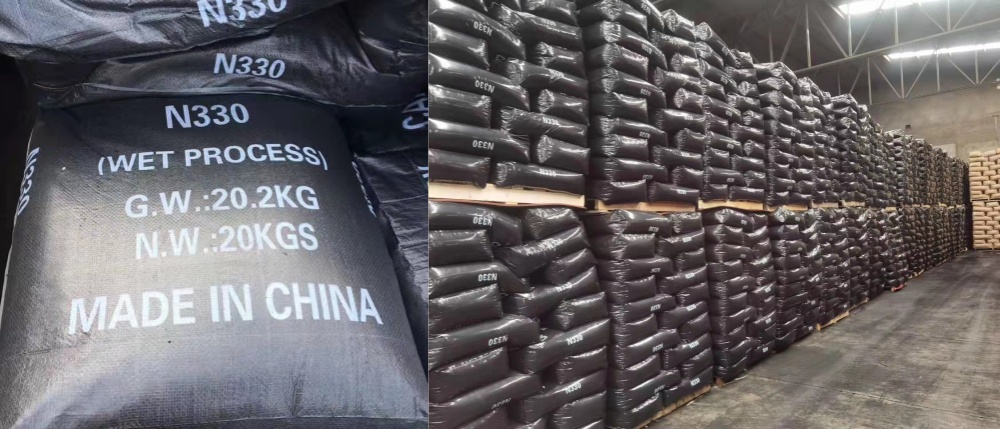
Due to the fact that the increase in production capacity is much greater than the increase in demand, the supply-demand imbalance in the carbon black pigments has significantly intensified in the past two years.
In 2025, the high level of social inventory in the Industrial Carbon at the beginning of the year led to a significant increase in supply throughout the year. In addition, the growth rate of domestic consumption was relatively small, and it is expected that the social inventory level will remain at a historical high at the end of the year, which may result in an abundant supply situation in the industry at the beginning of 2026, continuing to drag down the cycle and magnitude of price increases in the carbon black market.
On November 18th, the benchmark price of white carbon black was 5833.33 yuan/ton, unchanged from the beginning of this month. Looking back at the price trend of carbon black market throughout the year, the mismatch between supply and demand has continued to drag down carbon black prices, resulting in poor transactions during the cost increase cycle and unexpected price drops during the cost decline cycle.
In 2025, the carbon black industry showed a monthly trend of oversupply, and the inventory at the end of each month remained relatively high compared to the same period in history, leading to a decrease in market average prices. From the supply side, the high social inventory of the carbon black industry at the beginning of 2025 is the main reason for the abundant supply throughout the year. Although the production of the carbon black industry has slightly decreased compared to last year due to the decline in production of small and medium-sized enterprises, it is still at a high level in the past five years; From the demand side, the demand for all steel tires will increase in 2025, but the demand for semi steel tires and products will decline, resulting in a small increase in domestic consumption and limited effect on digesting the high inventory at the beginning of the year. Therefore, the price increase and duration of the market focus during this period are not as expected. During the period of rising carbon black prices from January to February 2025, there were few new orders for carbon black, and the increase in ending inventory indicates the accumulation of social inventory in the industry. At the beginning of January, the price of carbon black fell to a low level and downstream purchases were made at a low price. In February, the focus of carbon black prices shifted upward, and downstream products such as tires mainly consumed raw materials in the early stage. High priced orders from carbon black enterprises followed up generally, so the inventory of carbon black enterprises continued to increase from February to March, resulting in a shorter cycle of carbon black price increase.
After March, during the downward phase of High-Quality Carbon Black prices, the decline was greater than the cost decline. In the first half of the year, when carbon black enterprises had high inventory levels, the decline in carbon black prices was greater than the cost decline, and the industry generally fell into losses. Mainstream carbon black enterprises reduced production in March, but downstream tire operating loads were relatively high; The supply-demand gap in the industry narrowed from March to April, but tire companies mainly consumed pre stocked carbon black raw materials, and the market's social inventory remained relatively high. The price of carbon black continued to decline due to the lack of effective support.
With the increase in the operating load of the carbon black industry, the social inventory of the industry increased again from May to June, and the price of carbon black continued to be weak. At the end of June, social inventory remained at a high level, and the new order prices of carbon black enterprises continued to decline in July; In late August, under the pressure of industry losses, companies showed a clear willingness to push up prices. However, the shift in the focus of raw materials led to resistance from tire companies to the price increase of carbon black. With relatively abundant market supply, the price increase of carbon black was difficult to implement. In early September, mainstream large order negotiations basically stabilized the price in early August, but due to the prominent supply-demand contradiction, the price of new order negotiations in the market weakened again in late September.
The downstream demand in October showed a significant month on month decline, coupled with an increase in carbon black production load, further exacerbating the industry's supply-demand imbalance. After the recovery of the operating load of tire enterprises from November to December after the National Day and Mid Autumn Festival holidays, there is an expectation of another decline, which is bearish for the increase in demand for carbon black. The supply-demand contradiction in the industry is difficult to alleviate, and it is expected that carbon black prices will continue to fluctuate downward in the fourth quarter. The support for carbon black prices due to the increase in cost in November will also be weakened by the drag of supply and demand contradictions.
The expansion scale of the carbon black industry will still be relatively large in the next five years, and the period from 2026 to 2027 will be a period of concentrated production capacity. In the future, the expansion of the carbon black industry will focus on large enterprises and petroleum based raw material production enterprises with industrial chain and group advantages. Among them, Changhong Biotechnology, Sinochem Quanzhou, Guangzhou Lianyou, and Dushanzi Petrochemical are all petroleum based raw material production enterprises, and petroleum based enterprises are expected to continue to increase.
It is expected that the production capacity will enter a period of concentrated release from 2026 to 2028, but it will also be a period of concentrated elimination of outdated production capacity. Among them, the newly added production capacity will be over 1.425 million tons, and it is expected that around 800000 tons will be added in 2026, mainly through the entry of strong industrial groups, tire factories, and petroleum raw material production enterprises. With the continuous intensification of future supply-demand contradictions and limited room for market share growth, it is expected that the elimination speed of small and medium-sized carbon black enterprises may further increase, and the industry concentration is expected to continue to increase. However, it is expected that the domestic carbon black market demand will show a slight downward trend in 2026, and the supply-demand contradiction will further expand, leading to a continued decline in carbon black profit margins.
From the predicted data, the regional supply and demand pattern of the carbon black industry in 2026 will not change much compared to 2025, with East China and North China still being the main supply regions and East China being the largest demand region. Overall, there is no obvious separation of production and sales in the carbon black industry, and the national price trend is basically in a relatively consistent state. However, the relative concentration of demand in Shandong region will lead to stronger bargaining power of tire factories in Shandong region. Under the current situation of supply-demand mismatch, non Shandong market bargaining will also be deadlocked. At that time, the pricing of carbon black in Shandong region will have a guiding role or improvement in the phased bargaining of non Shandong regions.