

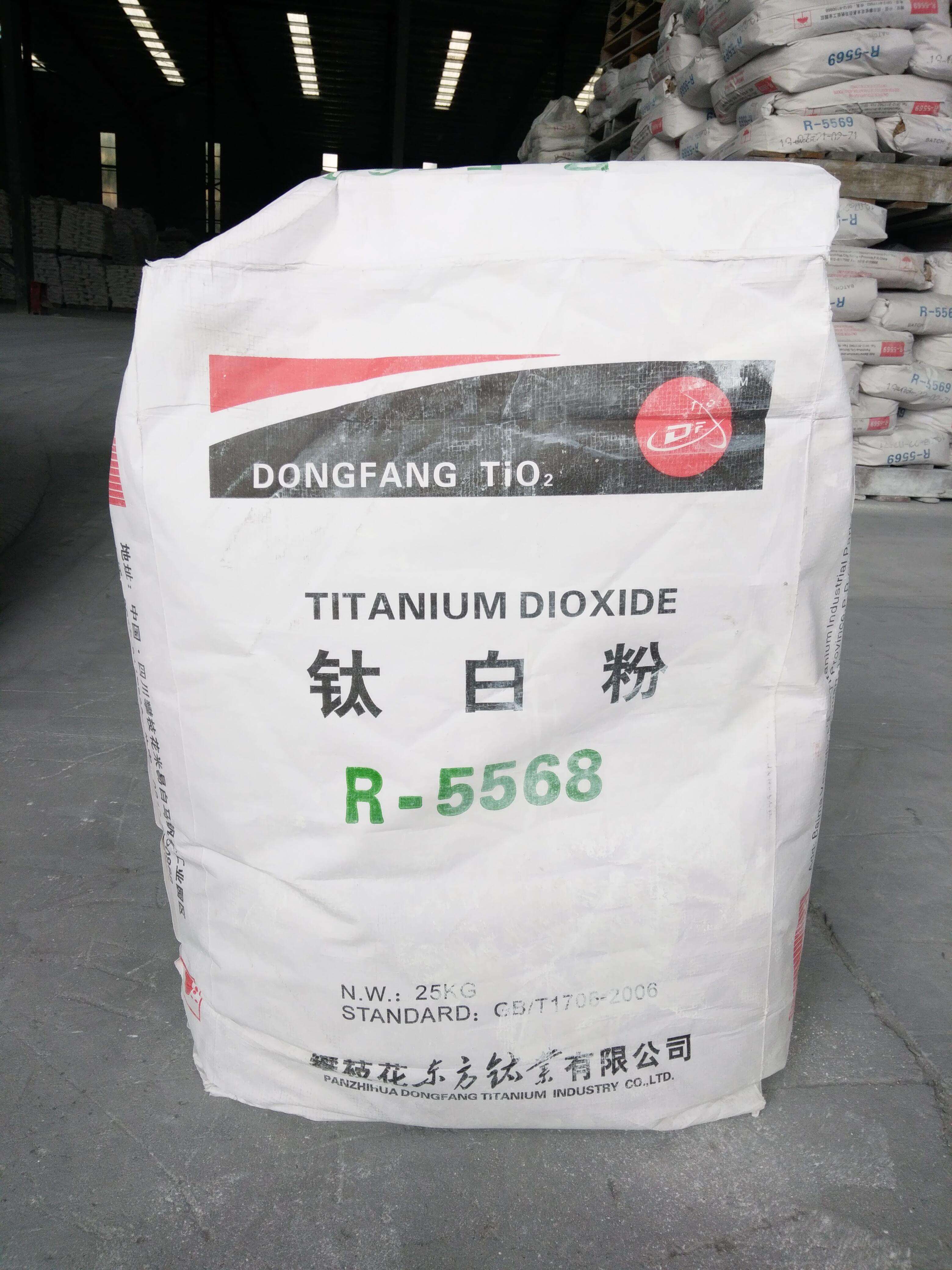
On June 9th, the domestic price of titanium dioxide was about 16700 yuan, an increase of about 25% compared to the beginning of the year. 14 titanium dioxide companies in the market also sent letters to raise prices at the same time, with a domestic increase of 1000 yuan/ton and an international market increase of 150 US dollars/ton during the same period.
Since the beginning of June, more than ten titanium dioxide production companies have issued intensive price increase notices, and market concerns have directly focused on a core issue: why does titanium dioxide "rise against the trend" in the context of deep real estate adjustment and sustained weak downstream demand?
01. Titanium dioxide: the "industrial MSG" that doesn't buy into coatings
Titanium dioxide, with a chemical composition of titanium dioxide (TiO), is currently the best performing and most widely used white inorganic pigment in the world. It is known as the "industrial monosodium glutamate" due to its white color, strong covering power, good coloring power, stable chemical properties, and non-toxic characteristics.
From the perspective of the industrial chain, coatings are the largest consumer export of titanium dioxide, accounting for over 60% of the total demand. Rutile and anatase titanium dioxide are the "mother colors" in coating formulations - whether it is the aesthetics of building exteriors, the gloss of high-end automotive paints, or the uniformity of furniture and wood coatings, they all rely on titanium dioxide as a white coloring base. According to institutional predictions, the consumption share of the coatings industry is expected to further increase from 59.1% to 62.2% from 2026 to 2030, mainly driven by the continuous improvement of quality requirements for titanium dioxide from environmentally friendly high-performance products such as water-based coatings and powder coatings.
Plastic is the second largest application area of titanium dioxide, accounting for approximately 24% to 25% of consumption. From electronic and electrical casings to automotive interior and exterior parts, from daily plastic products to food packaging films, titanium dioxide endows plastic products with a white background and enhances weather resistance. With the accelerating penetration of engineering plastics and modified plastics into the automotive and electronic fields, demand is maintaining a moderate growth trend.
In addition, the consumption in the papermaking industry accounts for about 8% to 10%. Titanium dioxide is mainly used for printing paper, decorative paper, and specialty paper to improve the glossiness, opacity, and printing adaptability of paper sheets.
In addition to the aforementioned "three pillars", sub sectors such as ink, cosmetics, and food additives also provide structural growth for titanium dioxide. In ink, titanium dioxide has become the core material for high-end printing ink and white ink due to its excellent coverage and coloring power. The demand for sun protection and brightening effects in the cosmetics industry also remains high.
02. The True Face of 'Rising Against the Trend'
If we were to define the supply and demand pattern of the titanium dioxide market in 2026, it would be "volume price deviation, structural mismatch".
The supply side is undergoing a capacity restructuring triggered by strict environmental control measures. Since 2026, environmental policies have continued to tighten, energy consumption control has become normalized, and inefficient sulfuric acid production capacity below 50000 tons per line has accelerated its withdrawal. From a national perspective, the sulfuric acid method titanium dioxide production equipment (excluding the co production process) has been included in the restricted catalog by multiple provinces, and the policy will officially come into effect on January 24, 2026. Jinpu Titanium Industry's 80000 tons/year production capacity has been completely shut down, accounting for about 50% of its total production capacity; Overseas giants are also accelerating their contraction, with Teno shutting down production capacity in Fuzhou, China, and the global high cost old production lines entering a period of centralized clearance.
The overall operating rate of the domestic titanium dioxide industry is about 70%, which is at a relatively low level in recent years, and there is no significant room for production increase in the short term. Most companies are executing early orders, and the supply of new goods is tight.
On the demand side, there is a scene of "two worlds of ice and fire". Coatings, as the largest downstream of titanium dioxide, account for over 60% of demand, but are currently in the "ice end" of the downturn in architectural coatings. In the first quarter of 2026, the new construction and completion areas of the real estate industry continue to bottom out, and orders from small and medium-sized coating enterprises are reduced. The overall coating construction rate is less than 60%, and the release of terminal demand is insufficient.
The plastic industry is also facing a double squeeze: the incremental demand driven by lightweighting of household appliances and automobiles is offset by downstream product companies' destocking cycles and insufficient high cost transmission capabilities, resulting in slow growth in demand.
Overall, the supply and demand logic of titanium dioxide in the first half of 2026 is highly condensed into one sentence: "Supply is shrinking, but demand is colder; price increases are driven by costs, not demand
03. The 'real engine' driving up the price of titanium dioxide
After understanding the mismatch between supply and demand, one can understand the "password" behind the real price increase of titanium dioxide - the core driving force behind the price increase comes from the significant increase in costs, rather than the enthusiasm for replenishing inventory on the demand side. The cost impact centered around raw material sulfur sulfuric acid is gradually pushing up the value chain of the entire titanium dioxide industry.
In the production cost, the total cost of titanium concentrate, sulfuric acid, electricity, and equipment maintenance accounts for over 60%. Producing 1 ton of titanium dioxide requires the consumption of 3 to 4 tons of sulfuric acid and 2.2 to 2.5 tons of titanium concentrate, among which the fluctuation of sulfuric acid prices has the most significant impact on the cost of titanium dioxide.
Sulfur, as an important raw material for sulfuric acid production, has an annual import dependency of about 50%. At the end of February 2026, the geopolitical conflict in the Middle East escalated, severely obstructing the Red Sea route and causing a large amount of imported sulfur from overseas to be cut off, leading to a surge in domestic sulfur and sulfuric acid prices. As of the end of May, the price increase per ton of sulfuric acid after the Chinese New Year is about 1000 to 1300 yuan, which, when converted to the production cost of titanium dioxide, is about 3000 to 5000 yuan per ton.
Although the price of titanium concentrate has slightly decreased by about 5% during the same period, providing a buffer space of about 300 to 500 yuan/ton for the cost side of titanium dioxide, the buffering effect is minimal compared to the pressure of sulfuric acid cost increase.
Therefore, the "upward channel" of the titanium dioxide market in the first quarter of 2026 presents an "abnormal" economic logic: manufacturers are still forced to adjust prices one after another in an environment of weak terminal demand and sluggish sales, in an attempt to reverse the situation of "selling one ton at a loss". Mysteel summarized this as "cost inversion, titanium dioxide manufacturers' production costs are inverted, and they have to go against the trend," with a cumulative increase of over 3500 yuan/ton in China from March to April.
At the beginning of June, facing the constant firmness of the price of sulfuric acid, the major manufacturers in the industry again conducted the seventh wave of concentrated price adjustment, with the domestic increase rising to 1000 yuan/ton and the international market rising by 150 dollars/ton, to bridge the cost gap between raw materials and products.