

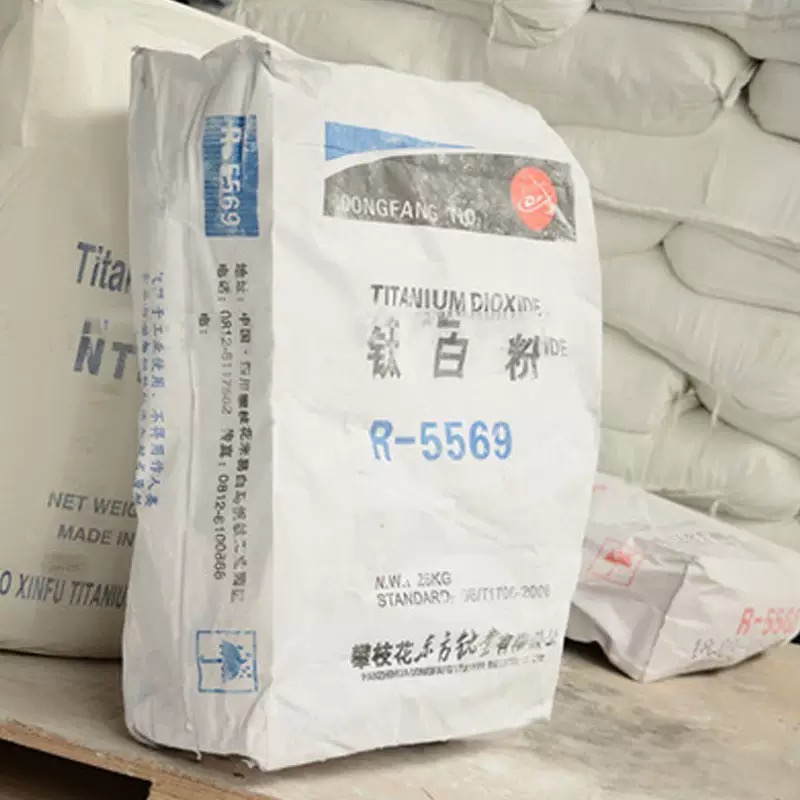
Many people who first encounter titanium dioxide may think of it as merely a "white pigment.".
In fact, in the plastic industry, titanium dioxide does far more than just whiten products.
It not only determines the product's appearance but also affects coverage, weather resistance, service life, and even directly influences whether customers are willing to purchase it.
Today, let's talk about one of the most commonly used additives in the plastic industry—titanium dioxide.
In fact, in the plastic industry, titanium dioxide does far more than just whiten products.
It not only determines the product's appearance but also affects coverage, weather resistance, service life, and even directly influences whether customers are willing to purchase it.
Today, let's talk about one of the most commonly used additives in the plastic industry—titanium dioxide.
1、 What is titanium dioxide?
Titanium dioxide (TiO ₂) is a white inorganic pigment and one of the most widely used white pigments in the world.
Due to its extremely high refractive index, it has a very strong covering ability.
Simply put:
Adding 1% white pigment, titanium dioxide often appears whiter, brighter, and more textured than regular white fillers.
Due to its extremely high refractive index, it has a very strong covering ability.
Simply put:
Adding 1% white pigment, titanium dioxide often appears whiter, brighter, and more textured than regular white fillers.
At present, there are mainly two types in the market:
① TiO2 Rutile
This is the most commonly used type in the plastic industry.
Features:
High whiteness, strong coverage, good weather resistance, excellent UV resistance, and not easily yellowing
Many household appliance casings, automotive plastic parts, and outdoor products choose this type.
① TiO2 Rutile
This is the most commonly used type in the plastic industry.
Features:
High whiteness, strong coverage, good weather resistance, excellent UV resistance, and not easily yellowing
Many household appliance casings, automotive plastic parts, and outdoor products choose this type.
②Titanium Dioxide Anatase
The price is relatively cheap.
Features:
Good whiteness and weather resistance, generally more suitable for indoor products
Like some ordinary packaging, stationery, and indoor items, they will be used.
The price is relatively cheap.
Features:
Good whiteness and weather resistance, generally more suitable for indoor products
Like some ordinary packaging, stationery, and indoor items, they will be used.
2、 Why is it necessary to add titanium dioxide to plastic?
Many customers will ask:
I just want to make the product white, can I just add a little white pigment casually
Actually, it's not.
① Improve whiteness
This is the most intuitive function.
Like refrigerator shells, washing machines, air conditioning panels, water dispenser shells, etc., which look clean and bright, most of them cannot do without titanium dioxide.
I just want to make the product white, can I just add a little white pigment casually
Actually, it's not.
① Improve whiteness
This is the most intuitive function.
Like refrigerator shells, washing machines, air conditioning panels, water dispenser shells, etc., which look clean and bright, most of them cannot do without titanium dioxide.
② Enhance coverage
Many recycled materials have a yellowish color.
If produced directly, it is easy to have uneven colors.
After adding titanium dioxide, it can effectively cover the base color, making the product color more consistent.
Therefore, many recycled plastic companies adjust the amount of titanium dioxide added according to the color of the raw materials.
Many recycled materials have a yellowish color.
If produced directly, it is easy to have uneven colors.
After adding titanium dioxide, it can effectively cover the base color, making the product color more consistent.
Therefore, many recycled plastic companies adjust the amount of titanium dioxide added according to the color of the raw materials.
③ Improve weather resistance
Many plastics are left outdoors for a long time:
Sunlight exposure, ultraviolet radiation, wind blowing, rain drenching
Over time, it becomes easier:
Yellowing, powdering, and aging
After surface treatment, rutile titanium dioxide can help improve the weather resistance of plastics, and is therefore widely used in outdoor plastic products.
Many plastics are left outdoors for a long time:
Sunlight exposure, ultraviolet radiation, wind blowing, rain drenching
Over time, it becomes easier:
Yellowing, powdering, and aging
After surface treatment, rutile titanium dioxide can help improve the weather resistance of plastics, and is therefore widely used in outdoor plastic products.
④ Improve product quality
Both are white:
A kind of white with gray hair;
Another type is white and translucent.
At first glance, customers feel completely different about the product.
Many terminal brands are willing to spend a little more cost just for better appearance.
Both are white:
A kind of white with gray hair;
Another type is white and translucent.
At first glance, customers feel completely different about the product.
Many terminal brands are willing to spend a little more cost just for better appearance.
3、 Is it better to add more titanium dioxide?
The answer is negative.
Many people who are new to plastic tend to have a misconception:
Since the whiter the better, then add a little more.
In fact, the more titanium dioxide, the better.
Adding too much may result in:
The cost has significantly increased; Poor dispersion can easily lead to white spots; The mechanical properties of some materials have decreased; Processing fluidity deteriorates.
Therefore, companies usually optimize their formulas based on product requirements, rather than simply increasing the amount of additives.
The answer is negative.
Many people who are new to plastic tend to have a misconception:
Since the whiter the better, then add a little more.
In fact, the more titanium dioxide, the better.
Adding too much may result in:
The cost has significantly increased; Poor dispersion can easily lead to white spots; The mechanical properties of some materials have decreased; Processing fluidity deteriorates.
Therefore, companies usually optimize their formulas based on product requirements, rather than simply increasing the amount of additives.
Although titanium dioxide is only one raw material in the formula, it often determines the first impression a plastic product gives people.
For traders, if they only know how to quote, it is easy to fall into price competition; If we can understand product performance, processing technology, and application scenarios, it will be easier to help customers solve problems and establish long-term cooperation.
For traders, if they only know how to quote, it is easy to fall into price competition; If we can understand product performance, processing technology, and application scenarios, it will be easier to help customers solve problems and establish long-term cooperation.